News and Information

2022-11-16

How to Choose a Servo Screwdriver Brand

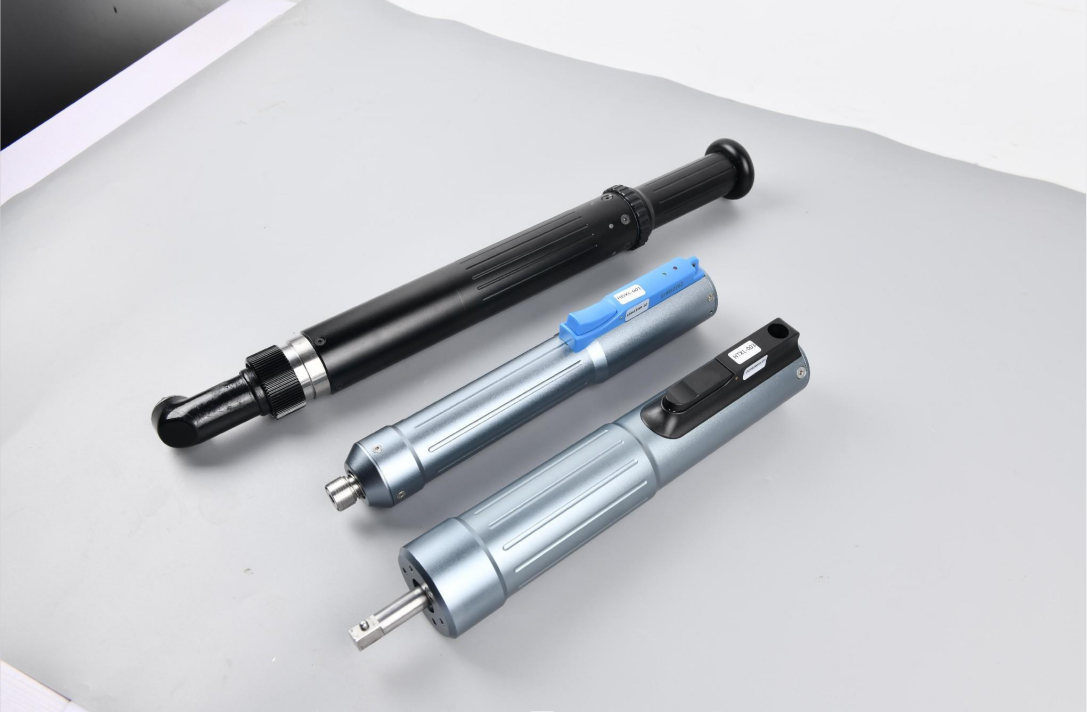
Servo screwdrivers are commonly used in automated production for joining or securing workpieces. Ordinary electric screwdrivers have fixed speeds, and adjusting their tightening force is relatively cumbersome and lacks feedback—making them completely uncontrollable and thus less efficient. This makes it impossible to meet the demands of smart factories for real-time acquisition of screw-tightening status data and precise torque control. That’s precisely when servo electric screwdrivers came into being. So, what should we pay attention to when choosing a brand of servo screwdriver? 1. The Range of Torque The Sensewee servo screwdriver offers a torque range from 0.01 N.m to 200 N.m, essentially covering the torque requirements of most products in the fastening industry. Higher torque levels can also be customized. In contrast, typical servo electric screwdrivers usually have a maximum torque of no more than 30 N.m, with most falling within 10 N.m. A wider torque range better meets the diverse application needs of the mechanical and electronics industries. 2. Communication Methods The Sensewee servo screwdriver uses serial communication protocols RS232/RS485, following the industrial-standard Modbus RTU protocol. It also supports TCP/IP network communication and can operate at four baud rates: 115,200, 96,000, 192,000, and 384,000. Additionally, it features I/O ports that allow external inputs to control the screwdriver’s start-up and task switching, and output I/O signals to provide feedback on tightening status and results. It has strong scalability. By contrast, most conventional servo screwdrivers rely solely on external I/O communication, which limits their scalability and hinders data transmission and interaction. 3. Operational Performance The Sensewee servo screwdriver achieves an accuracy of ±3% to ±5% across its entire torque range, with a CMK value greater than 1.33, ensuring that product quality control requirements are well met. If a servo electric screwdriver exhibits significant accuracy deviations over prolonged use, it becomes difficult to meet the required precision standards. In terms of angular positioning, it can achieve an accuracy as fine as 0.01 revolutions, equivalent to 3.6°. This enables precise and rapid screening of defective products with issues such as floating heads or stripped threads, resulting in a low false-alarm rate. Regarding rotational speed, it allows segmented-speed fastening—employing a slow-fast-slow approach—to ensure accurate tooth engagement, rapid tightening, and precise torque control. This not only greatly improves fastening efficiency but also effectively guarantees fastening accuracy. 4. Tightening Strategies Typical servo electric screwdrivers often have poor resolution in detecting target torque and angle. To achieve high-quality products, one should look for models equipped with torque, angle, and speed control modules, enabling quick setup of various strategies and tasks tailored to specific process requirements. Moreover, it’s important to choose products that support configuration-based point-of-contact control and clamping torque strategies to meet demanding tightening needs. The Sensewee servo screwdriver can readily satisfy the vast majority of market requirements. 5. After-Sales Service The above points address the selection criteria based on the product’s inherent characteristics. However, after-sales maintenance also significantly impacts the customer’s normal use. Therefore, when selecting a product brand, it’s crucial to pay attention to after-sales service. Timely provision of after-sales support is an important indicator for evaluating a brand. The Sensewee servo screwdriver provides professional technical support services, fully guaranteeing users’ satisfaction and optimal performance.

View details >>

< 1...789...19 >