

What’s the difference between an electric screwdriver and a smart electric screwdriver?
2022-11-14
The screwdriver can be said to be one of the most common tools in our daily lives. With continuous technological advancements, screwdrivers today come in many different types. So, screwdrivers, electric screwdrivers, and... Smart electric screwdriver What’s the difference? Let’s explore the differences among these three screwdrivers together!
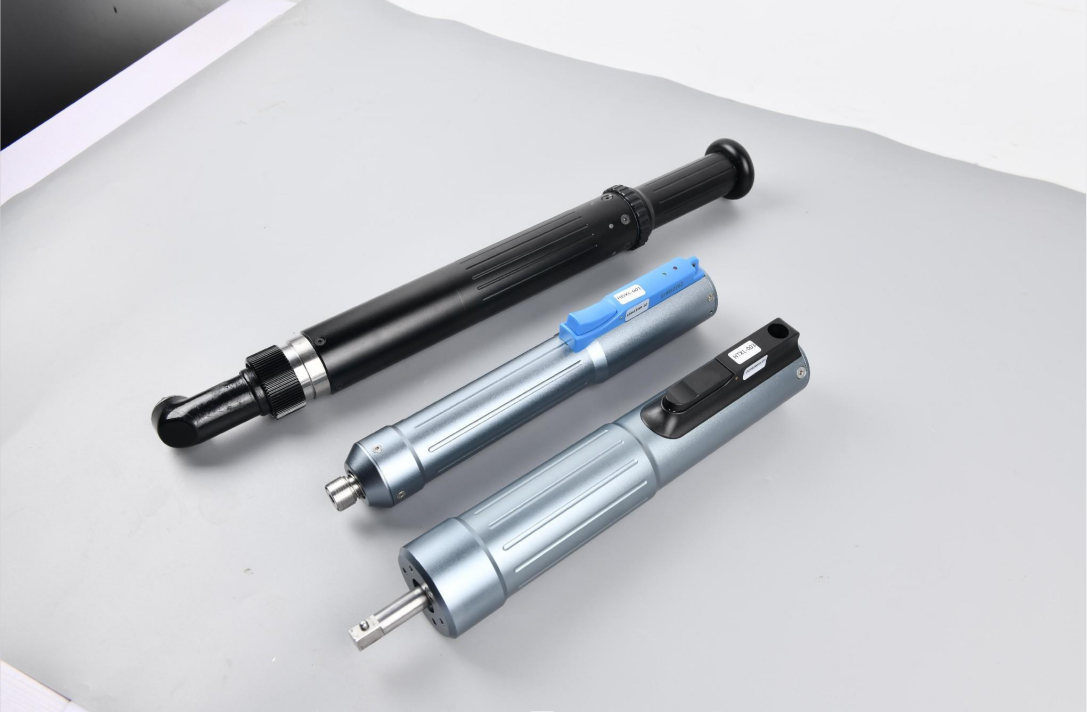
As is well known, a screwdriver is an industrial tool typically featuring a wedge-shaped tip that fits into the recessed slot of a screw head. It’s also referred to as a screwdriver, flathead screwdriver, or simply a “screwdriver.” Screwdrivers are generally categorized into two types: Phillips (positive) and slotted (negative).
With the advent of an increasingly intelligent era, manual screwdrivers have gradually been phased out. Replacing them are electric screwdrivers—also known as electric screwdrivers or power screwdrivers. This power tool is equipped with mechanisms that allow for the limitation and adjustment of torque. Inside, it houses a motor that rotates the screw by drawing power from a battery. Currently, the vast majority of electric screwdrivers on the market operate on batteries.
The smart electric screwdriver is currently one of the relatively superior types of screwdrivers. Not only does it achieve power-driven operation, but it also enriches the functionality of screwdrivers, further meeting the needs of the assembly industry. The primary functions of a smart electric screwdriver include performing tightening operations according to given instructions and providing feedback on parameters such as rotation angle and torque. , Torque, speed, and number of revolutions are all adjustable, and the torque accuracy can reach... ±3% to ±5%, ready-to-use out of the box. All tightening records can be saved and uploaded to the MES system. It features a floating-height and thread-slip detection function, enabling rapid identification of defective products. When paired with barcode scanners, coordinate systems, photoelectric switches, and other components, the device’s enable signal can be used to precisely control the start and stop of the electric screwdriver—effectively addressing issues such as operator inattention, leakage, and errors right from the source, thereby virtually eliminating the possibility of human error.
In summary, as industry continues to advance and develop in the future, smart electric screwdrivers will also evolve to offer an even wider range of sophisticated functions, driven by advancements in various industrial fields.
Previous article
Next article
Relevant Information
Introduction to Smart Electric Screwdrivers
2023-08-19
How to use a smart electric screwdriver
2023-06-12
SenseweeA reliable partner brand you can trust.

Copyright & ©2025 Shenzhen Sensewee Intelligent Technology Co., LTD All rights reserved
SEO
Technical Support:Chinese Enterprises Cross-border Shenzhen
Persistently build a comprehensive service system for our customers and continue to lead the future through innovation.
Sales Engineer (Huang Sheng)
Sales Engineer (Shi Sheng)
Sales Engineer (Lu Sheng)
Address
Building G, Room 608, Longjing Science and Technology Park, No. 335 Bulong Road, Shajing Subdistrict, Longgang District, Shenzhen City, Guangdong Province
Copyright & ©2025 Shenzhen Sensewee Intelligent Technology Co., LTD All rights reserved
SEO
Technical Support:Chinese Enterprises Cross-border Shenzhen
在线客服添加返回顶部
右侧在线客服样式 1,2,3 1
图片alt标题设置: Remember to modify: Company Name
表单验证提示文本: Content cannot be empty!
循环体没有内容时: Sorry, no matching items were found.
CSS / JS 文件放置地