

Introduction to the Smart Electric Screwdriver Features
2023-06-05
Compared to traditional pneumatic tools, Smart electric screwdriver The control accuracy has been significantly improved. The precision torque sensor can instantly detect tightening results and immediately trigger an alarm if the values exceed the preset range. A user-friendly programming system is provided, enabling operators to set the rotational speed and torque according to different connection conditions, thereby achieving better tightening performance and preventing tightening defects. Today, let’s take a look at the introduction of the monitoring angle function for intelligent electric screwdrivers.
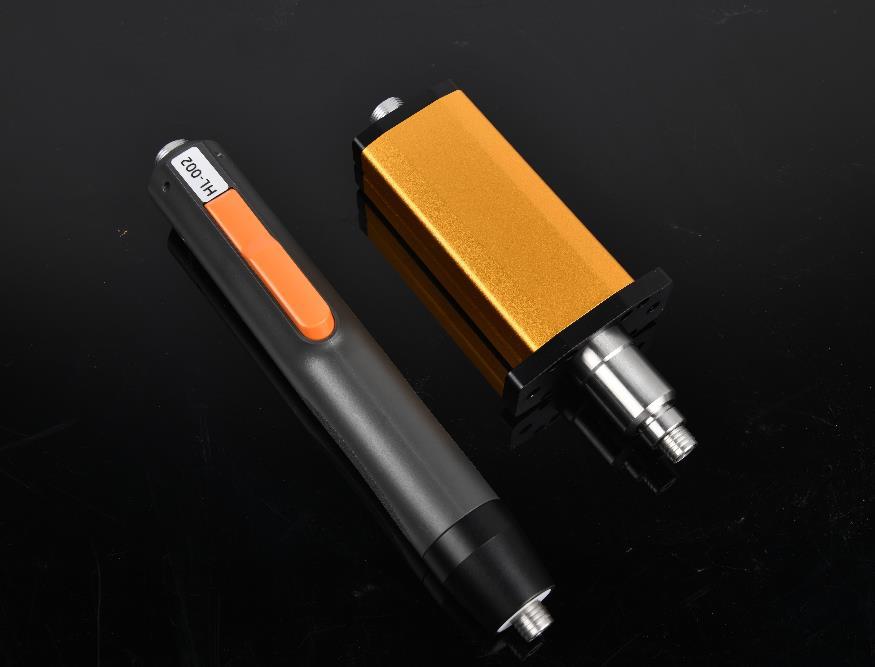
1. Introduction to the Smart Electric Screwdriver’s Features
The sensor can simultaneously record both the tightening torque and the angle of rotation. We use the torque as the target value to control the tightening outcome, while monitoring the angle through which the bolt has rotated once the target torque is reached. In mass production, fasteners and connected parts are highly consistent, so the angles of tightening tend to be very close. However, for parts with abnormal conditions, the monitored tightening angles may deviate significantly from the normal data. By leveraging this difference, we can easily identify defective materials and abnormal operations, thereby implementing error-proofing measures in production and ensuring that manufacturing proceeds smoothly.
2. Smart Electric Screwdriver Operation Procedure
When standard parts are assembled and tightened, taking T0 as the monitoring starting point, the tightening monitoring angle value will fall within the normal monitoring range A once the target torque is reached. However, if the target torque is achieved prematurely due to a part anomaly, taking T0 as the monitoring starting point, the tightening monitoring angle at the moment the target torque is reached will fall below the normal range, landing instead within interval B. In such cases, the tightening equipment will trigger an alarm because the monitoring angle for this tightening operation has not reached the lower limit of the set normal range. Typically, situations that lead to this type of alarm include using parts with excessively short threaded pairs, insufficient thread-engagement depth, or repeatedly tightening bolts that have already been fully tightened.
3. Precautions for Smart Electric Screwdrivers
Due to abnormal parts, the target torque is reached too late. Taking T0 as the monitoring starting point, when the target torque is achieved, the tightening monitoring angle exceeds the normal range and falls within Zone C. At this point, the tightening equipment will also trigger an alarm because the monitoring angle for this tightening operation has exceeded the upper limit of the set normal range. Typically, such alarms are caused by using parts with excessively long threaded assemblies or by failing to install components such as washers or sealing rings.
As smart electric screwdrivers become increasingly widespread in actual production, the role of error-proofing features in electric tightening tools is becoming ever more important. During product assembly, appropriate error-proofing methods can be selected based on the specific situation, thereby minimizing the likelihood of operators making mistakes and delivering substandard products to customers, and ensuring the quality of assembly.
Relevant Information
Introduction to Smart Electric Screwdrivers
2023-08-19
How to use a smart electric screwdriver
2023-06-12
SenseweeA reliable partner brand you can trust.

Copyright & ©2025 Shenzhen Sensewee Intelligent Technology Co., LTD All rights reserved
SEO
Technical Support:Chinese Enterprises Cross-border Shenzhen
Persistently build a comprehensive service system for our customers and continue to lead the future through innovation.
Sales Engineer (Huang Sheng)
Sales Engineer (Shi Sheng)
Sales Engineer (Lu Sheng)
Address
Building G, Room 608, Longjing Science and Technology Park, No. 335 Bulong Road, Shajing Subdistrict, Longgang District, Shenzhen City, Guangdong Province
Copyright & ©2025 Shenzhen Sensewee Intelligent Technology Co., LTD All rights reserved
SEO
Technical Support:Chinese Enterprises Cross-border Shenzhen
在线客服添加返回顶部
右侧在线客服样式 1,2,3 1
图片alt标题设置: Remember to modify: Company Name
表单验证提示文本: Content cannot be empty!
循环体没有内容时: Sorry, no matching items were found.
CSS / JS 文件放置地