

Application of Smart Screwdrivers in Non-Standard Products
2019-01-23
The term “flexible manufacturing” has gained popularity since the emergence of the Industry 4.0 concept. In the past, manufacturing in industry often gave the impression that every machine was performing repetitive tasks around the clock, day after day. However, with the advent of the flexible production line concept, people have begun to strive for a production system capable of handling multiple task modes on a single line. Achieving this kind of production model not only allows for highly effective cost savings—eliminating the need for a dedicated production line for each product—but also significantly boosts overall production efficiency. Yet, this shift requires machines that once performed only repetitive actions to become “flexible,” a goal that remains relatively challenging to achieve with today’s technology.
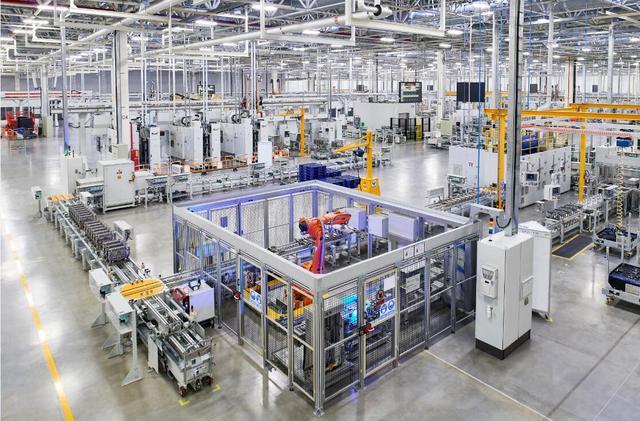
In our daily lives, many products are manufactured according to standardized specifications and models. However, with the rise of smart manufacturing, people are increasingly focusing on personalized customization. Uniformity is no longer the goal; instead, many individuals are eager to embrace products tailored specifically to their own personality and physical characteristics. As a result, manufacturers’ core objectives have shifted—from being product-centric to service-centric. This trend is undoubtedly the path that manufacturing will take in the future. Therefore, in any stage of the production process, having a versatile machine is an essential requirement.

The smart screwdriver can perfectly meet the requirements of flexible assembly right from the moment it’s put into use. Its core principle is that, based on the data stored in the task and according to the programmed instructions, it can adjust the torque, number of turns, and speed differently depending on the location, allowing it to seamlessly switch between tasks and tighten screws of various types. This feature perfectly aligns with the requirements of a flexible assembly line.
In addition, conventional smart screwdrivers can record tightening data and offer traceability features, enabling engineers to determine whether the manufactured products meet quality standards based on this data. Moreover, data analysts can use the torque and rotation angle of screws to assess which supplier’s raw materials offer the best cost-performance ratio. In short, from the very beginning to the end of the production process, this approach can help manufacturers significantly reduce costs.
To align with the development of intelligent manufacturing, smart screwdrivers can also be connected to Ethernet, enabling parameter modification and adjustment, data recording, and operational control via a controller.
Previous article
Next article
Relevant Information
Introduction to Smart Electric Screwdrivers
2023-08-19
How to use a smart electric screwdriver
2023-06-12
SenseweeA reliable partner brand you can trust.

Copyright & ©2025 Shenzhen Sensewee Intelligent Technology Co., LTD All rights reserved
SEO
Technical Support:Chinese Enterprises Cross-border Shenzhen
Persistently build a comprehensive service system for our customers and continue to lead the future through innovation.
Sales Engineer (Huang Sheng)
Sales Engineer (Shi Sheng)
Sales Engineer (Lu Sheng)
Address
Building G, Room 608, Longjing Science and Technology Park, No. 335 Bulong Road, Shajing Subdistrict, Longgang District, Shenzhen City, Guangdong Province
Copyright & ©2025 Shenzhen Sensewee Intelligent Technology Co., LTD All rights reserved
SEO
Technical Support:Chinese Enterprises Cross-border Shenzhen
在线客服添加返回顶部
右侧在线客服样式 1,2,3 1
图片alt标题设置: Remember to modify: Company Name
表单验证提示文本: Content cannot be empty!
循环体没有内容时: Sorry, no matching items were found.
CSS / JS 文件放置地