

The smart screwdriver, paired with a multi-joint robot, enables tightening from multiple angles.
2019-01-23
Preface: Multi-joint robots, also known as “multi-degree-of-freedom robots,” are widely used in large-scale industrial production. Their basic structure consists of a spatial open-chain mechanism composed of multiple rotary joints. These robots feature multiple degrees of freedom, each of which is a rotary joint, and boast an open architecture that enables excellent interaction with the external environment. They are well-suited for automated mechanical operations across a wide range of industrial fields, such as automatic assembly, painting, material handling, and welding.
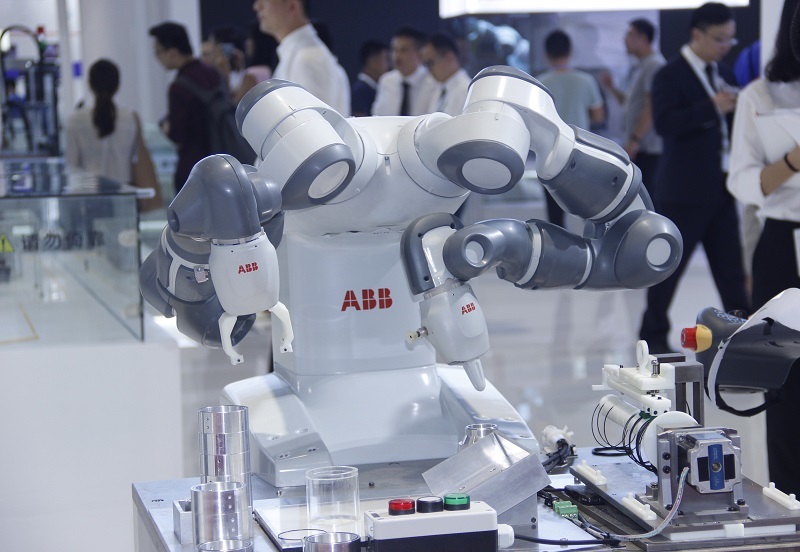
A multi-joint robot consists of a body section, an arm section, a wrist section, and a hand section. The vast majority of multi-joint robots are based on a rotary base frame, whose primary function is to directly connect, support, and transmit power to the robot’s main motion mechanisms.
Multi-joint robots are typically used in production lines for automobiles or other large-scale equipment, where a robotic system with a relatively wide range of motion and capable of efficient production is required. This is precisely why six-axis robots often feature a rotary base design.
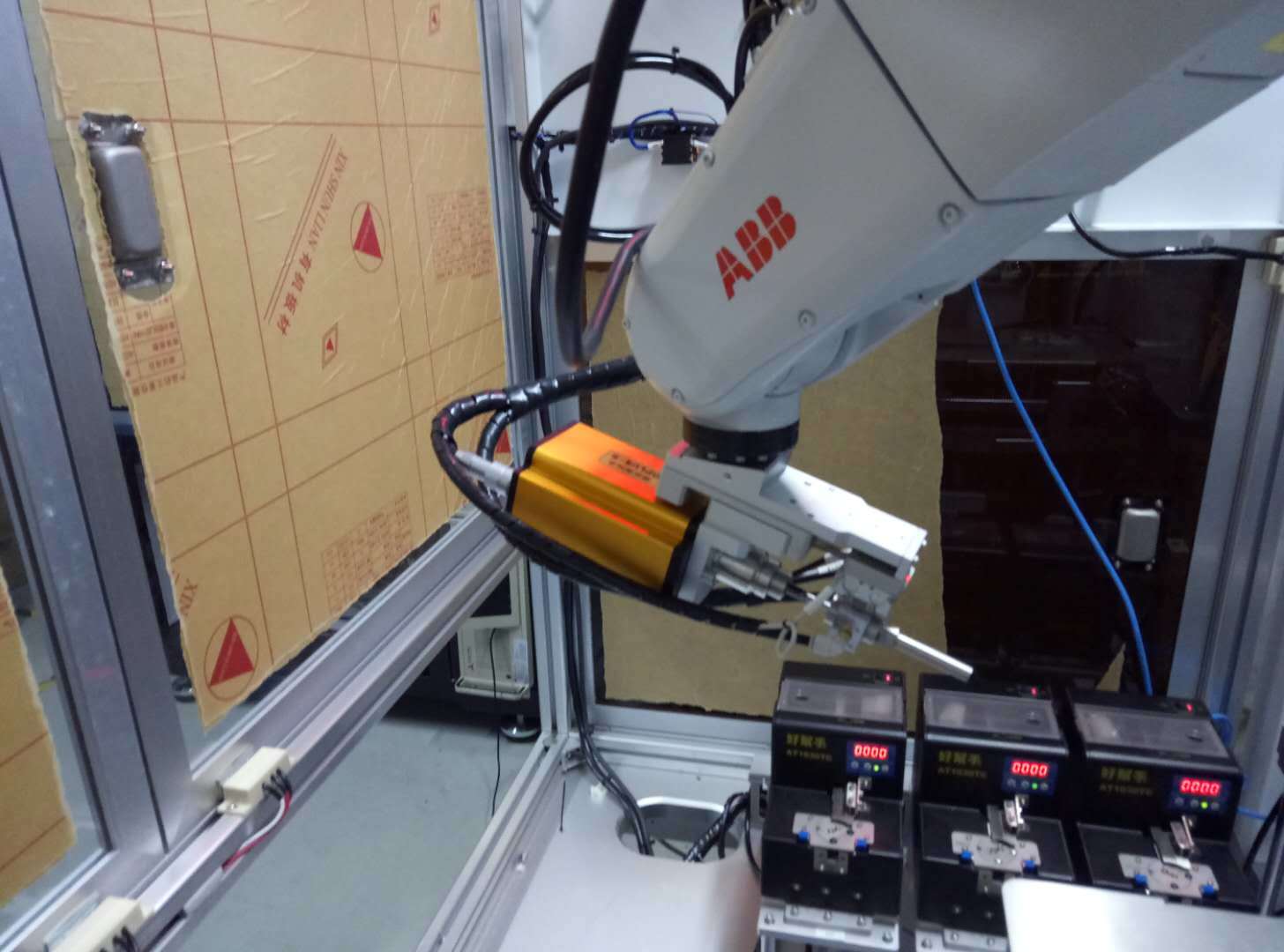
Therefore, the most distinctive feature of multi-joint robots—unlike conventional planar robots—is their ability to work from multiple angles. This is particularly important in multi-angle assembly applications, such as automotive assembly, where screws in different locations need to be tightened at different angles. As a result, horizontal assembly methods like those used previously are simply inadequate.
When paired with an intelligent screwdriver, a multi-joint robot can perform precise screw-fastening operations from multiple angles. There’s no longer any need for workers to manually hold the screwdriver during assembly—simply set the desired torque level, and the multi-joint intelligent tightening device will automatically and precisely tighten screws at every angle according to standardized specifications. Moreover, it comes equipped with a feedback function that allows inspectors to monitor the tightening status at any time. In case of an emergency, the device will immediately sound an alarm and halt operation, providing an excellent tightening solution for many applications that require multi-angle tightening.
Previous article
Relevant Information
Introduction to Smart Electric Screwdrivers
2023-08-19
How to use a smart electric screwdriver
2023-06-12
SenseweeA reliable partner brand you can trust.

Copyright & ©2025 Shenzhen Sensewee Intelligent Technology Co., LTD All rights reserved
SEO
Technical Support:Chinese Enterprises Cross-border Shenzhen
Persistently build a comprehensive service system for our customers and continue to lead the future through innovation.
Sales Engineer (Huang Sheng)
Sales Engineer (Shi Sheng)
Sales Engineer (Lu Sheng)
Address
Building G, Room 608, Longjing Science and Technology Park, No. 335 Bulong Road, Shajing Subdistrict, Longgang District, Shenzhen City, Guangdong Province
Copyright & ©2025 Shenzhen Sensewee Intelligent Technology Co., LTD All rights reserved
SEO
Technical Support:Chinese Enterprises Cross-border Shenzhen
在线客服添加返回顶部
右侧在线客服样式 1,2,3 1
图片alt标题设置: Remember to modify: Company Name
表单验证提示文本: Content cannot be empty!
循环体没有内容时: Sorry, no matching items were found.
CSS / JS 文件放置地