

What are the differences between stepper electric screwdrivers and servo electric screwdrivers?
2023-04-27
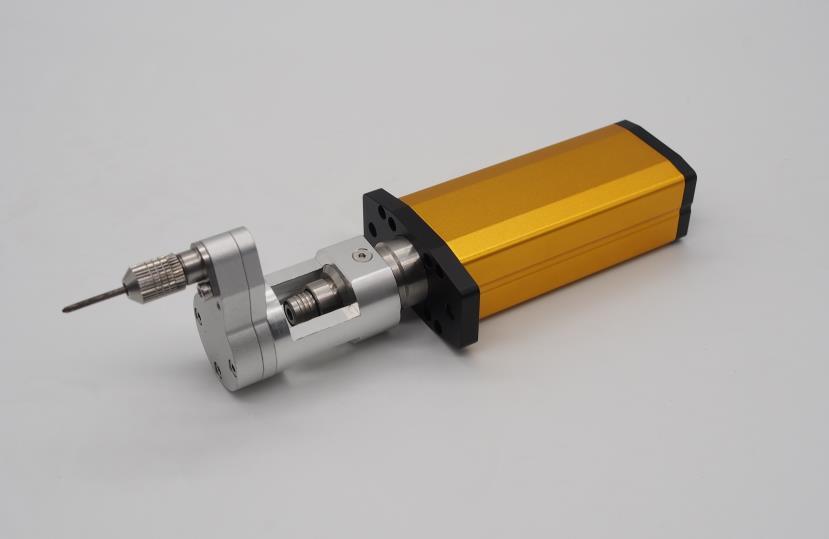
Servo screwdriver It is a type of industrial equipment that is used relatively frequently. It features a relatively large starting torque—once a control voltage is applied to the stator, the rotor immediately begins to rotate. Therefore, servo screwdrivers are characterized by rapid startup and high sensitivity. In everyday use, people often compare them with stepper screwdrivers. So, what are the key differences between these two types of tools?
1. The two have different frequency response characteristics.
The output torque of a stepper electric screwdriver decreases as the rotational speed increases, and at higher speeds, there is a sharp drop in torque. Therefore, its maximum recommended operating speed is typically limited to between 300 and 600 RPM. In contrast, an AC servo electric screwdriver operates with a constant torque output; thus, it can deliver its rated torque within its rated speed range. It’s worth noting that when the operating speed reaches or exceeds the rated value, the screwdriver will switch to constant power output.
II. The two have different overload capacities.
Stepper electric screwdrivers generally lack overload capacity, whereas AC servo electric screwdrivers have relatively strong overload capability. However, since stepper electric screwdrivers do not possess this overload capability, when selecting a motor, it’s typically necessary to choose one with a higher torque rating in order to overcome the drawbacks of inertial torque. After normal startup, though, only a small fraction of that energy is actually needed, which can easily lead to wasted torque. Therefore, if your primary concern is saving torque, we recommend opting for a servo electric screwdriver instead.
3. The two have different operational performances.
The stepper electric screwdriver uses open-loop control. If the startup frequency is too high or the load is excessive, it may experience phenomena such as lost steps or stalling. Additionally, during the stopping process, if the rotational speed is too high, it is prone to overshoot. In contrast, the AC servo electric screwdriver drive system employs closed-loop control. During operation, the driver samples the feedback signals from the motor encoder and makes real-time adjustments accordingly. As a result, this system generally does not experience lost steps or overshoot, offering more reliable control and operational performance.
The above is a summary of the differences between servo screwdrivers and stepper screwdrivers. We hope this will help you better understand these products and make a more informed choice that suits your specific production and usage needs. Additionally, we strongly recommend that you follow the equipment’s operating procedures strictly when using these tools to avoid any safety risks.
Previous article
Relevant Information
Introduction to Smart Electric Screwdrivers
2023-08-19
How to use a smart electric screwdriver
2023-06-12
SenseweeA reliable partner brand you can trust.

Copyright & ©2025 Shenzhen Sensewee Intelligent Technology Co., LTD All rights reserved
SEO
Technical Support:Chinese Enterprises Cross-border Shenzhen
Persistently build a comprehensive service system for our customers and continue to lead the future through innovation.
Sales Engineer (Huang Sheng)
Sales Engineer (Shi Sheng)
Sales Engineer (Lu Sheng)
Address
Building G, Room 608, Longjing Science and Technology Park, No. 335 Bulong Road, Shajing Subdistrict, Longgang District, Shenzhen City, Guangdong Province
Copyright & ©2025 Shenzhen Sensewee Intelligent Technology Co., LTD All rights reserved
SEO
Technical Support:Chinese Enterprises Cross-border Shenzhen
在线客服添加返回顶部
右侧在线客服样式 1,2,3 1
图片alt标题设置: Remember to modify: Company Name
表单验证提示文本: Content cannot be empty!
循环体没有内容时: Sorry, no matching items were found.
CSS / JS 文件放置地