

Common error-proofing methods for smart electric screwdrivers
2023-04-20
In the mechanical assembly industry—particularly in automotive and final-assembly plants—the quality of threaded fastener assembly directly affects the overall vehicle assembly quality and driving reliability. Therefore, controlling the tightening torque of screws and preventing assembly errors have become critical issues. As a result, an increasing number of automakers are opting for high-precision electric tools for assembly operations. Currently, there are numerous types of electric tightening tools available on the market, each with varying degrees of error-proofing capabilities. How to fully harness the functions of these electric tools and truly realize their value is a highly important question. Today, let’s take a closer look at this together. Smart electric screwdriver Common mistake-proofing methods.
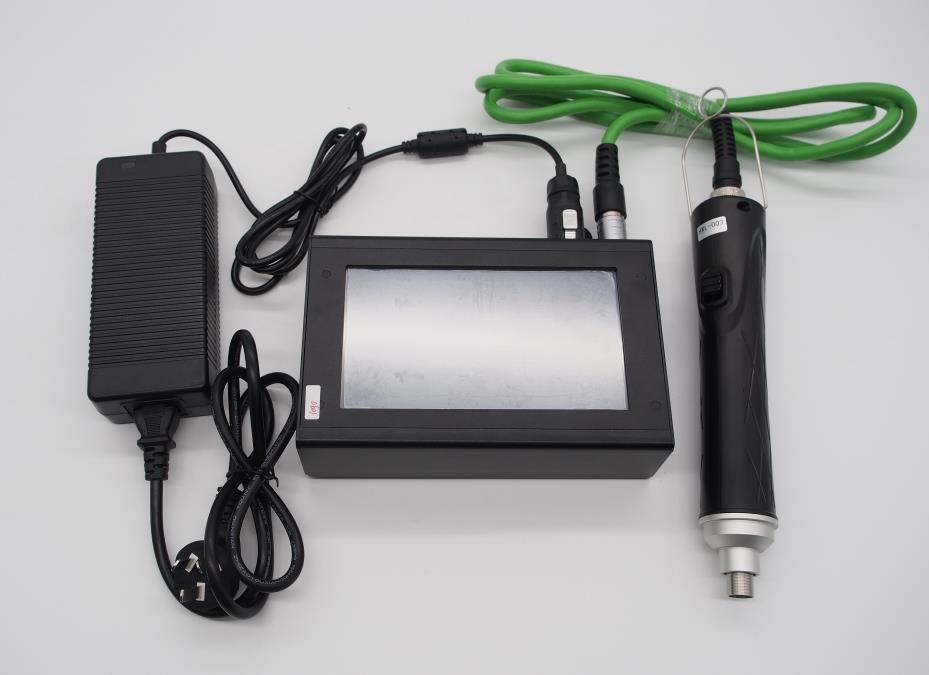
1. Statistical Error-Proofing Method
In manufacturing enterprises, it is common for operators to use single-axis electric torque tools to tighten multiple fasteners, or for multi-axis electric torque tools to tighten multiple sets of fasteners. To prevent errors in this process, we can adopt a method of counting the number of fasteners tightened. When using this approach, before tightening the fasteners, the production line’s control program (PLC program) must be properly configured so that the electric torque tool and the PLC program can communicate with each other. The number of fasteners to be tightened must also be pre-set in the control program.
2. Error-proofing method combining sleeve selector with tightening sequence
In actual use, we often encounter situations where a single workpiece requires tightening with several different torque levels during the process. In such cases, we need to employ a task-switching procedure—tightening multiple fasteners in a specific sequence. However, this approach carries the risk of improper tightening order, which could lead to quality defects or even accidents. To address this issue, we can impose restrictions on the sequence in which socket selectors are used within the program. By integrating the socket selector with the tightening sequence, we can effectively prevent errors from occurring.
3. Angle-limiting error-proofing method
Sometimes, even though we use the quantity-counting error-proofing method for error prevention, due to the large number of fasteners involved, operators may inadvertently retighten one or more fasteners during the process. As a result, although the counter shows a sufficient number of “pass” readings, some fasteners still remain improperly tightened. In such cases, we can enhance the quantity-counting error-proofing method by adding an angle-monitoring approach to further improve error prevention.
As is well known, once a fastener has been tightened, if the smart electric screwdriver applies an external force to the fastener again, the fastener will not start rotating immediately upon the application of the external force. Instead, it will only begin rotating again once the applied external force reaches a certain threshold. At this point, we can set a very small tightening angle—each tightening action must exceed this preset minimum tightening angle in order to be counted as a correctly tightened fastener.
Previous article
What are the differences between stepper electric screwdrivers and servo electric screwdrivers?
Next article
Relevant Information
Introduction to Smart Electric Screwdrivers
2023-08-19
How to use a smart electric screwdriver
2023-06-12
SenseweeA reliable partner brand you can trust.

Copyright & ©2025 Shenzhen Sensewee Intelligent Technology Co., LTD All rights reserved
SEO
Technical Support:Chinese Enterprises Cross-border Shenzhen
Persistently build a comprehensive service system for our customers and continue to lead the future through innovation.
Sales Engineer (Huang Sheng)
Sales Engineer (Shi Sheng)
Sales Engineer (Lu Sheng)
Address
Building G, Room 608, Longjing Science and Technology Park, No. 335 Bulong Road, Shajing Subdistrict, Longgang District, Shenzhen City, Guangdong Province
Copyright & ©2025 Shenzhen Sensewee Intelligent Technology Co., LTD All rights reserved
SEO
Technical Support:Chinese Enterprises Cross-border Shenzhen
在线客服添加返回顶部
右侧在线客服样式 1,2,3 1
图片alt标题设置: Remember to modify: Company Name
表单验证提示文本: Content cannot be empty!
循环体没有内容时: Sorry, no matching items were found.
CSS / JS 文件放置地